DANHEIM
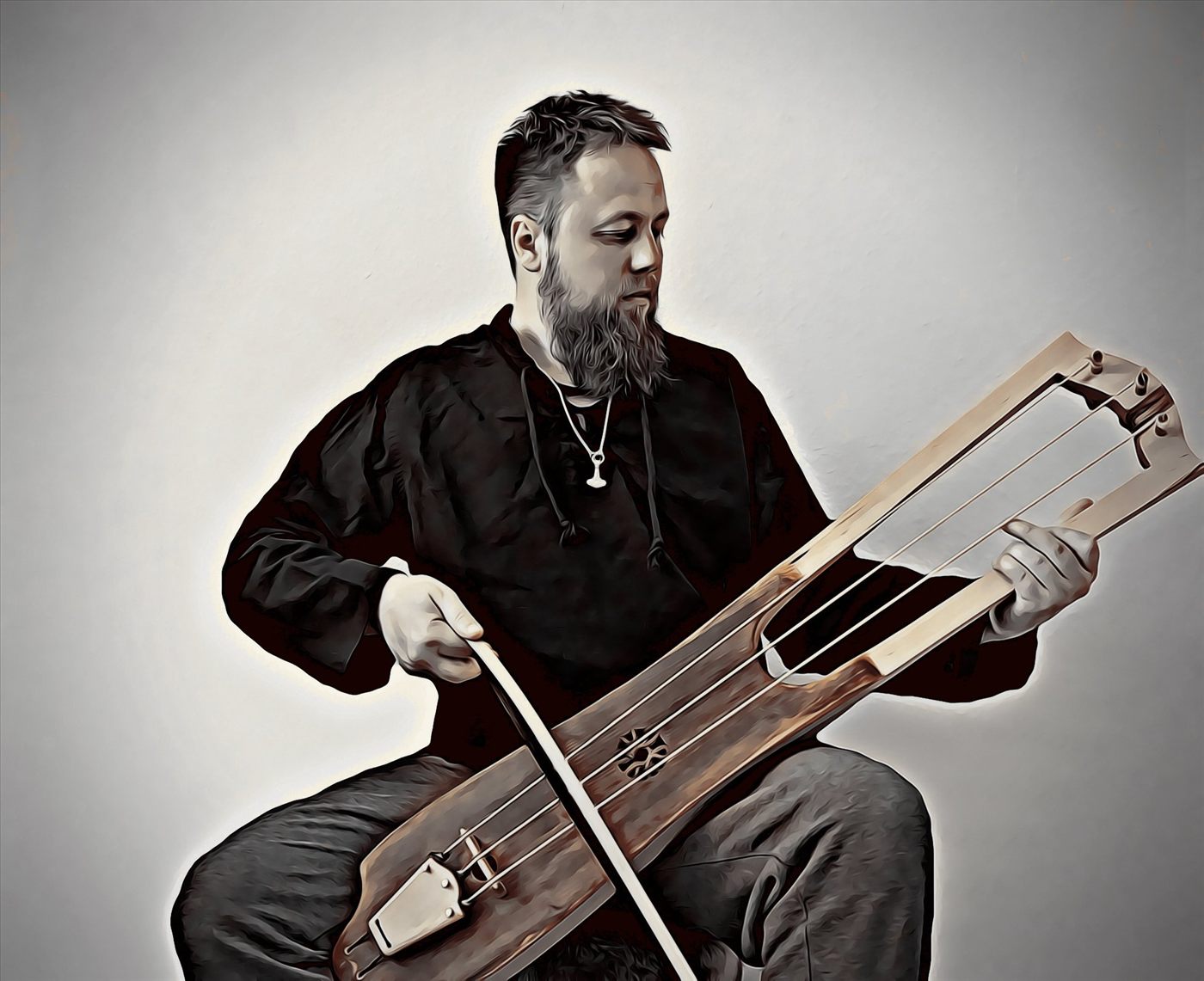
Danheim bowing the tagelharpa
Music Info

Viking-Age Instruments

Instruments unearthed from a thousand years of Nordic soil. The archaeology behind the sound.

What did the Viking age actually sound like? No recordings survive, but the ground remembers. These are the real instruments archaeology has given back to us, photographed as they were found, and the ancestors of the instruments heard throughout Danheim's music.

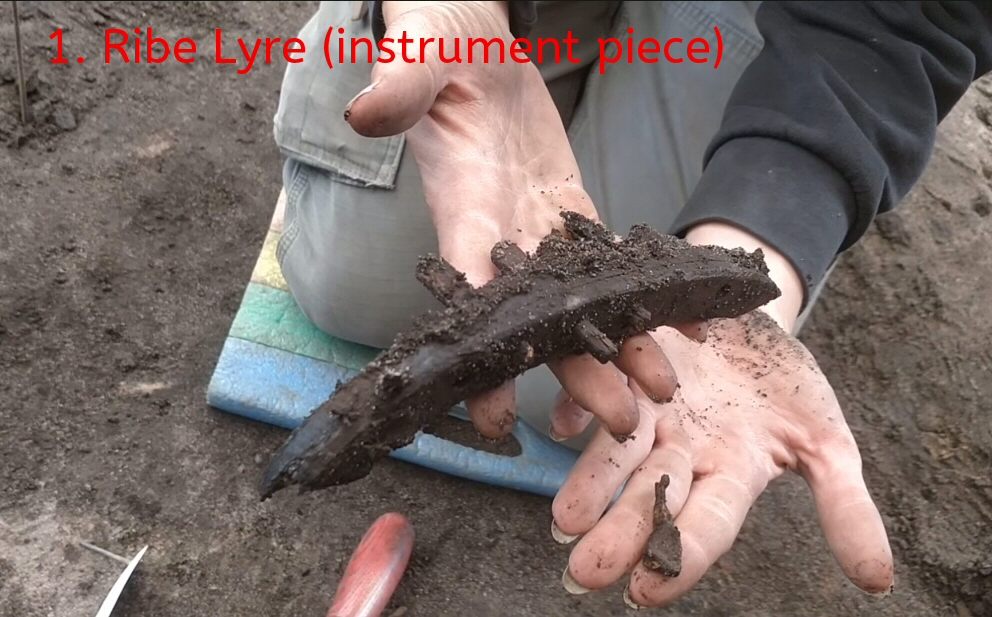
The Ribe lyre fragment as it was excavated
Found: Ribe, Denmark · c. 720 CE

I.The Lyre

In 2018, archaeologists in Ribe, Denmark unearthed the remains of a lyre dated to around 720 CE. It is the oldest stringed instrument ever found on Danish soil, from the dawn of the Viking age. The Ribe lyre is still undergoing careful conservation: its waterlogged wood must be impregnated and stabilised before the finer details of its construction can be studied. Even so, it proves that the halls of the north rang with strings more than a millennium ago.
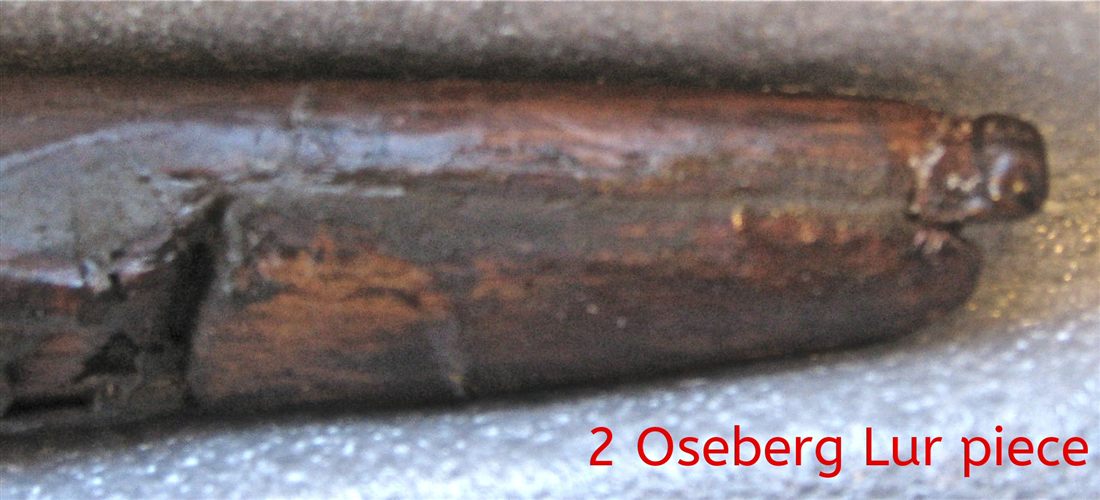
The lur from the Oseberg ship burial
Finds: Oseberg, Norway · Herning, Denmark

II.The Lur

A long wooden wind instrument, known from two famous finds: the Oseberg lur from Norway (c. 800 CE), a tapered wooden tube about 107 cm long, and Denmark's Herning lur (c. 400 to 774 CE), roughly 80 cm, carved from hazel that was split, hollowed, and bound back together with ash strips into a trumpet-like horn. Scholars still debate whether such finds were battle signals, ritual objects or true instruments, while the sagas speak of Heimdallr's Gjallarhorn, the horn 'heard in all worlds.'

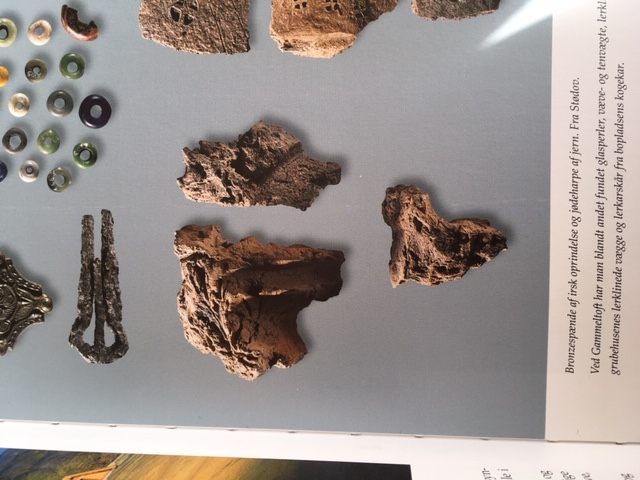
The iron jawharp found at Stødov, Helgenæs
Found: Stødov, Helgenæs · Museum Østjylland

III.The Jawharp

A small iron mouth harp found at Stødov on the Helgenæs peninsula, Denmark, dated to the Viking age. It is one of many such finds across Scandinavia. Held against the teeth and plucked, it produces the hypnotic, buzzing drone that has become a signature of Nordic folk. The Stødov specimen rests today at Museum Østjylland (catalogue x197, EBM 408).

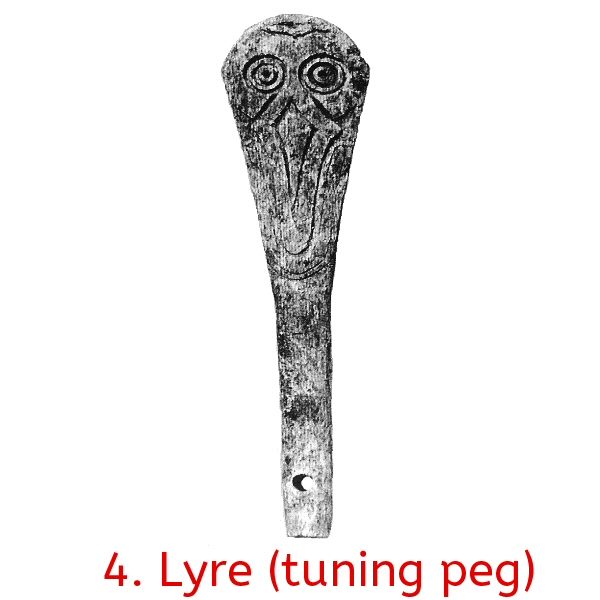
Yrsa's tuning key, a decorated bone tuning peg
Evidence: Yrsa's tuning key · Nidaros carvings

IV.The Tagelharpa

The bowed lyre, known as the tagelharpa or jouhikko, strung and bowed with horsehair. A decorated bone tuning peg from the 6th or 7th century ('Yrsa's tuning key') suggests the Norse knew both plucked and bowed strings, and stone carvings at Nidaros Cathedral show musicians with three-stringed instruments. Its mournful, grinding voice is the beating heart of the Danheim sound.

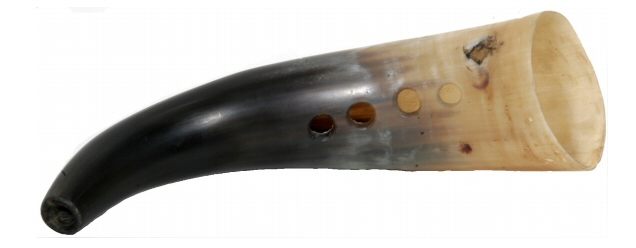
The finger-holed cow horn from Västerby
Found: Västerby, Sweden · 9th century

V.The Cow Horn

A 9th-century cow horn from Västerby, Sweden, pollen-dated, with four finger holes carved along its length. Part signal horn, part flute. It could carry simple melodies across a fjord, or summon a household home through the dusk.

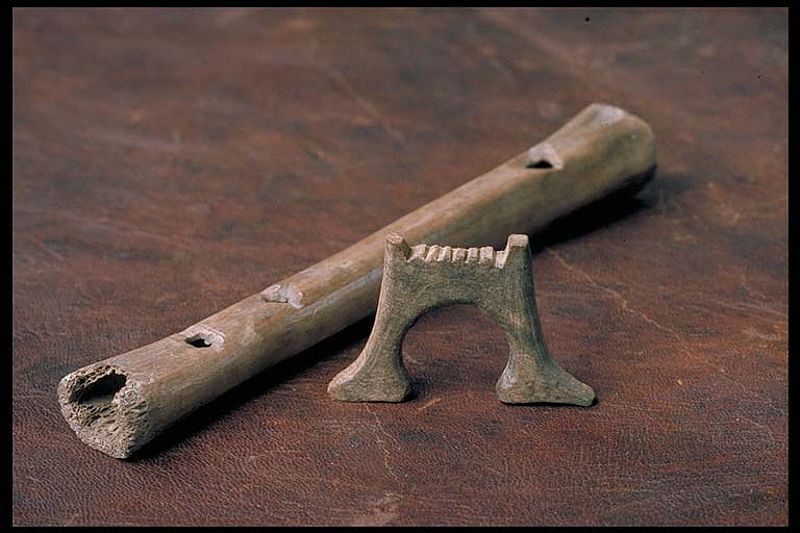
The bone flute from Björkö
Found: Björkö (Birka), Sweden

VI.The Bone Flute

From Björkö in Sweden, the island of the great trading town Birka, comes a 14.4 cm flute carved from animal bone with three drilled finger holes. Small, humble and piercingly clear. Flutes like this were the everyday music of the Viking age: carried in a pouch, played by firelight.

Curious which instruments appear on a particular Danheim track? The instrumentation is listed in the description of every video on the official YouTube channel. And if you want these sounds for your own music, the Danheim-crafted sample libraries live at Frostwave Audio.